Call recording and privacy
Recording customer calls is normal for banks, insurers, clinics and support teams, but India has no statute on call recording as such. The rules come from court rulings, data protection law and sector regulators' circulars, and between them they decide whether you may record, what you must tell the caller and how long you keep the file.
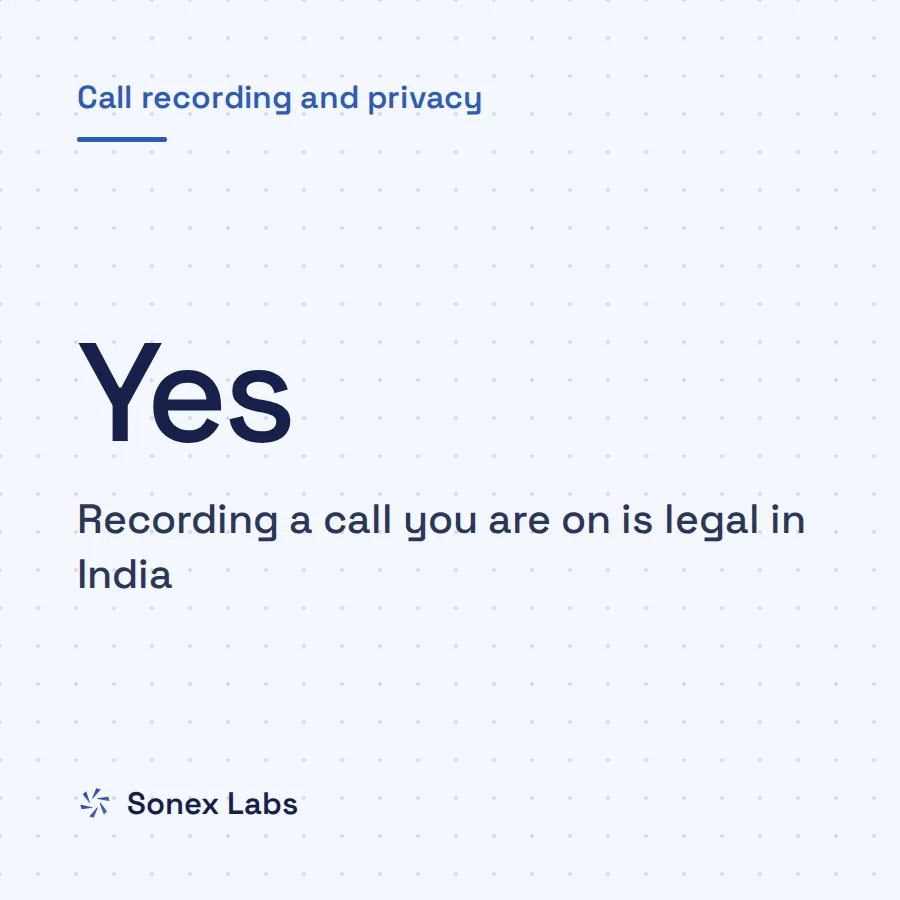
Start with whether call recording is legal in India, also available in Hindi. Recording is legal when you are one of the people on the call, and no law says everyone on it must agree first. The limits fall on how a recording is used, shared and kept, and the guide covers what a recording notice should say and what a court needs before it accepts a recording as evidence.
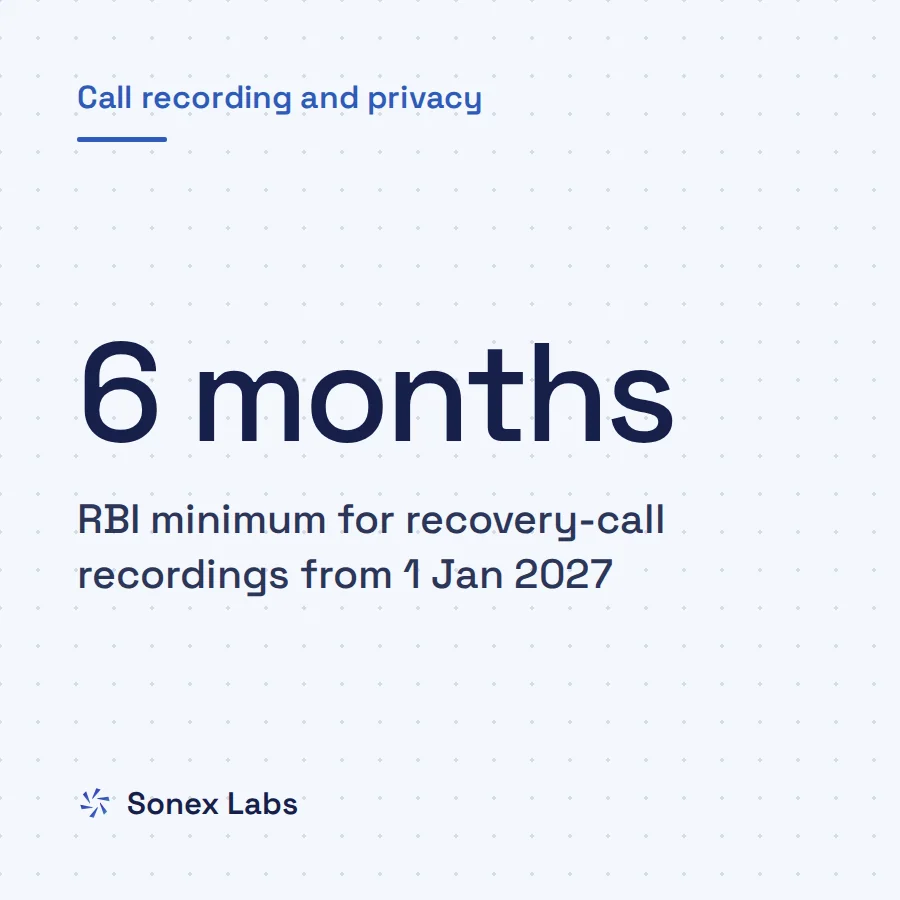
Retention comes next, and India has no single period. How long to keep call recordings puts each regulator's rule in one table: a lender keeps recovery calls for six months, a stockbroker keeps phone orders for at least three years, and the guide explains what to do when one rule says keep and another says erase.
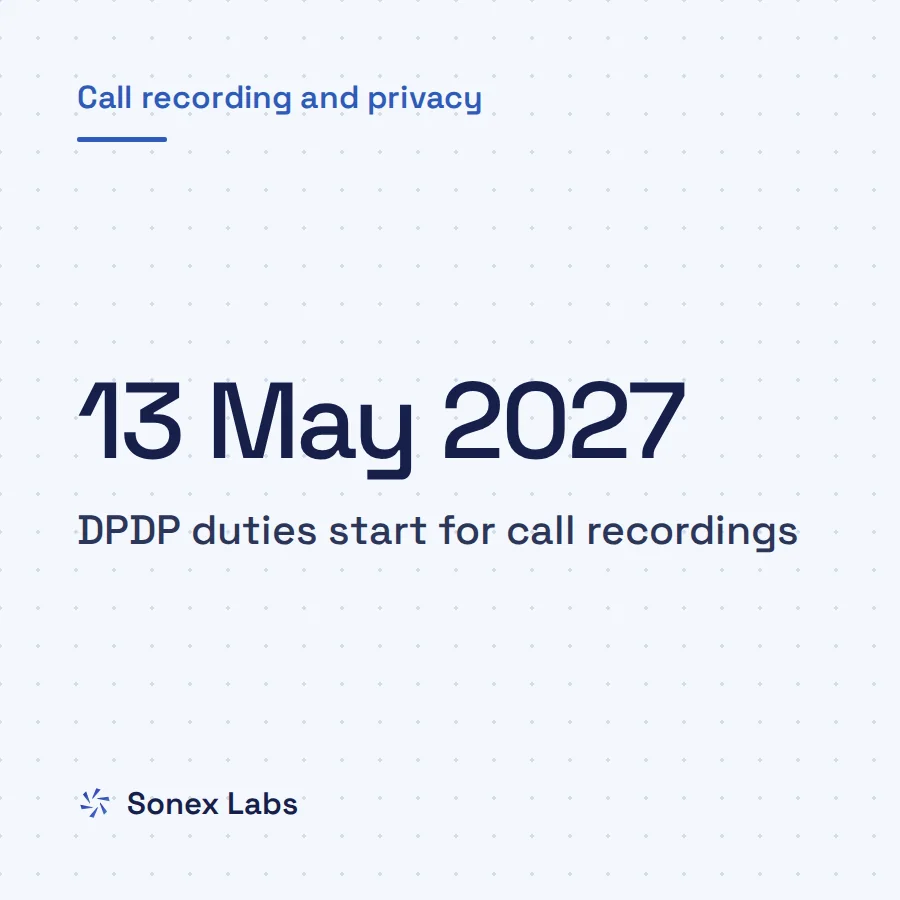
The DPDP Act and Rules add duties from 13 May 2027, when notice, security, breach reporting and erasure start. A recording or transcript that can be linked to a person is then personal data, and the business that decides why it is recorded answers for it. There is no November 2026 deadline to collect consent again.
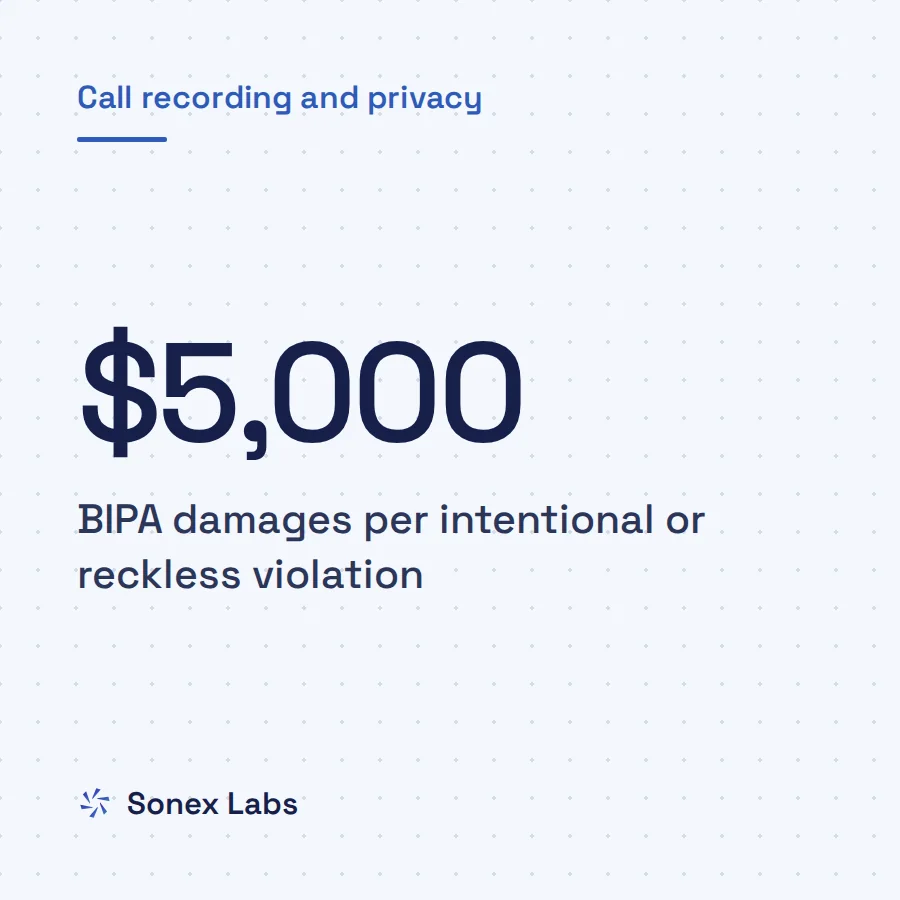
If you analyse voices rather than only store them, read when a voice counts as biometric data. A recording becomes biometric data once software turns it into a model that can identify the speaker, and Illinois' BIPA then requires written notice and a signed release, with damages of $1,000 to $5,000 per violation.

Building voice agents that follow the rules?
Sonex Labs voice agents speak 250+ languages, with calling windows, retry limits and recordings set per campaign.