Healthcare
Hospitals and clinics use voice agents to book appointments, send reminders and answer routine questions. Health information is among the most protected data there is, and the rules on what may be said to a patient were written for doctors and telemedicine platforms rather than for software, so the first task is to decide where the front desk ends.
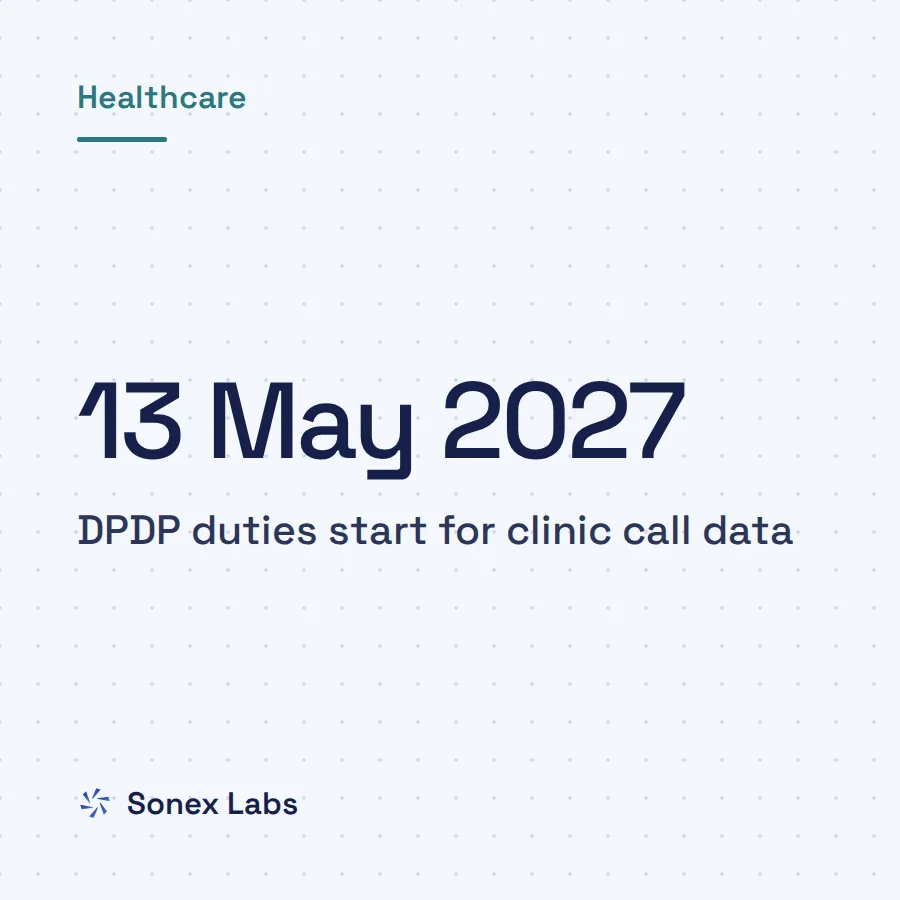
In India, start with what an AI receptionist may say to patients. It can book appointments, send reminders, give directions and fees and read out instructions the clinic has written. It must not counsel patients, suggest medicines or explain results, because the Telemedicine Practice Guidelines say AI platforms may not counsel or prescribe. In an emergency it should tell the caller to call 112 or go to the nearest emergency department, then hand over to staff. Patient call data falls under the DPDP Act, whose core duties start on 13 May 2027.
For the practical side, AI receptionists for clinics in India covers how the agent should say dates and times in Hindi and Telugu, how fast it should hand over and how to price it against your own call volume.
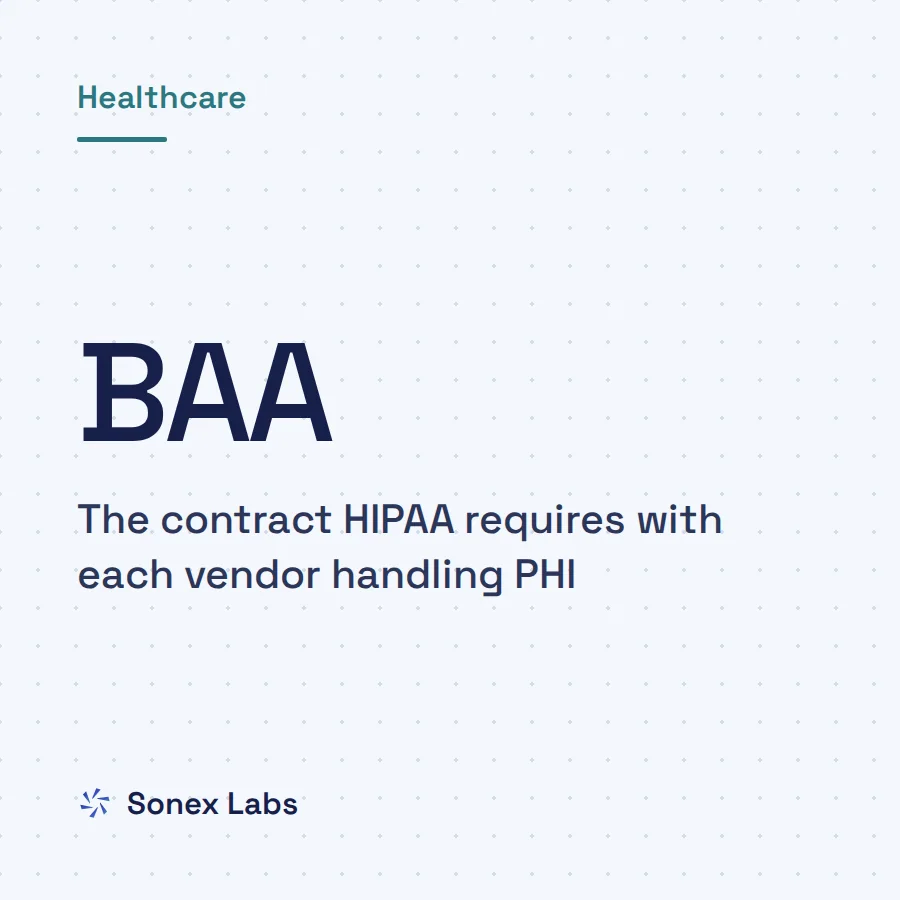
In the US, read HIPAA for voice agents. No voice AI product is HIPAA compliant on its own, because the law binds organisations rather than software. A setup is compliant when every vendor that handles patient data on the call has signed a business associate agreement (BAA), down to each subcontractor, and the clinic keeps its own safeguards in place. Reminder calls the agent places must also meet a separate telephone law, the TCPA, and the guide explains its exemption for healthcare calls to mobile phones.
Building voice agents that follow the rules?
Sonex Labs voice agents speak 250+ languages, with calling windows, retry limits and recordings set per campaign.