On this page
- What a pre-issuance verification call is, and why insurers make it
- Is a PIVC mandatory under IRDAI rules?
- What IRDAI found in the Canara HSBC Life order
- How ombudsmen and the 2011 guidelines judge call records
- What a PIVC should confirm
- A sample PIVC script and the decision to issue
- Bank-sold policies, AI voice agents and calling numbers
- Key dates
- Sources
What a pre-issuance verification call is, and why insurers make it
PIVC stands for pre-issuance verification call. The insurer calls the proposer, the person applying for the policy, after the proposal form is signed but before the policy is issued. The aim is to confirm that the person understood the product, the premium, who gets paid and their right to cancel, while there is still time to stop the sale.
Timing is what sets the PIVC apart from other calls. A welcome call or a post-sale feedback call happens after the policy is issued, when the contract already exists. The PIVC is the last chance to stop a wrong sale before there is a contract to unwind and a premium to refund.
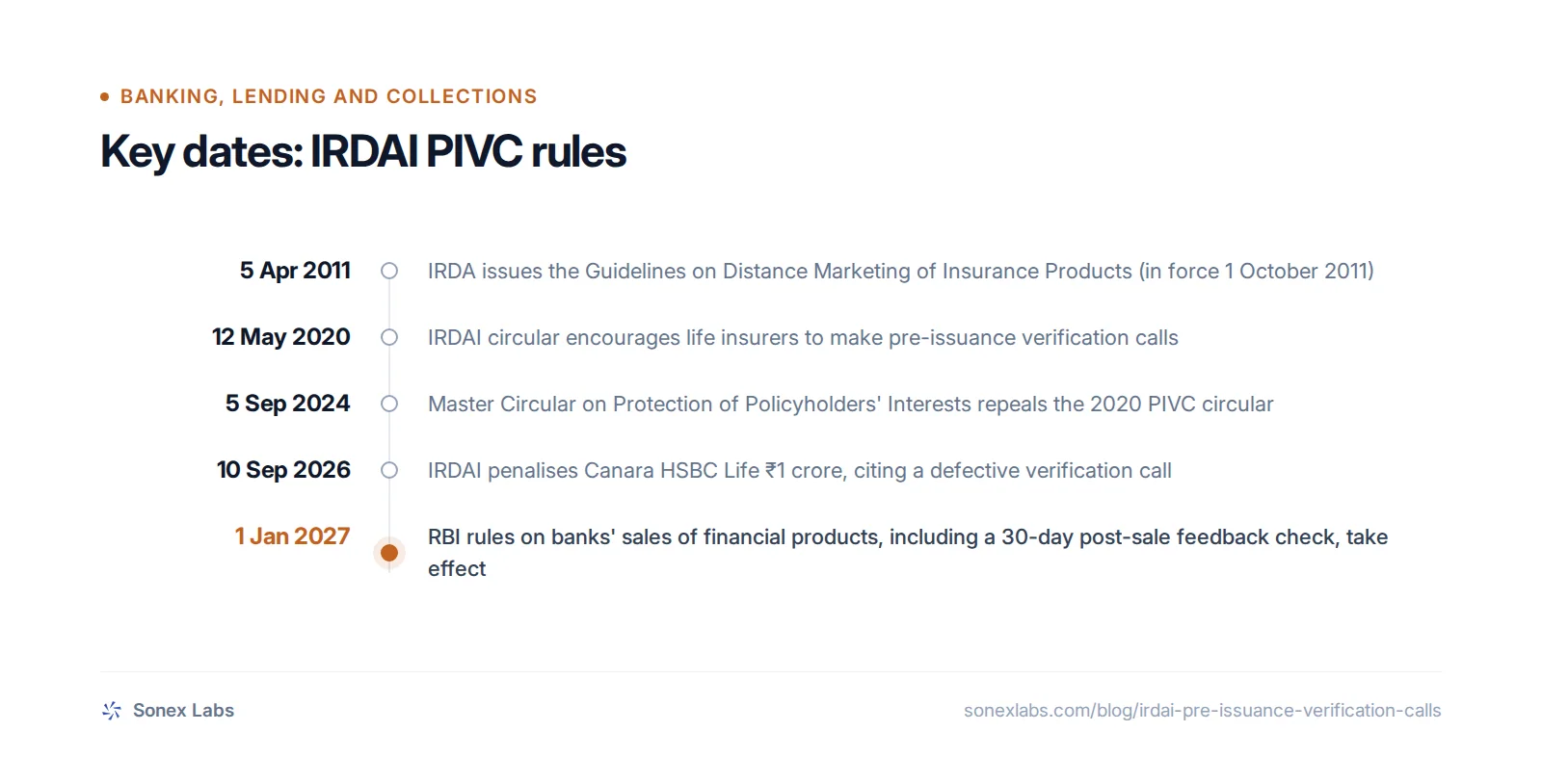
PIVCs are most common in life insurance, especially savings, annuity and unit-linked plans sold through banks and telemarketers, where long premium terms and complex benefits make mis-selling most costly. IRDAI, India's insurance regulator, set out the purpose in a 2020 circular. It said the call is made "to prevent mis-selling and unfair business practices". It added that the call ensures prospects "are fully informed and made aware of the terms and conditions of the product being sold" (IRDAI circular of 12 May 2020).
Is a PIVC mandatory under IRDAI rules?
Not by name, as far as we found. We found no IRDAI regulation or circular now in force that says insurers must make a pre-issuance verification call, though we searched IRDAI's site rather than reading every circular. Even the 2020 circular, the only one on the subject, was permissive. It said life insurers "are encouraged to conduct Pre-Issuance Verification Call (PIVC) to the extent possible and certainly in important cases", and suggested board-approved guidelines to that effect (IRDAI/Life/Misc/CIR/116/05/2020).
The Master Circular on Protection of Policyholders' Interests, 2024 then repealed it, listing it as item 27 among the circulars it supersedes (para 31.1; IRDAI/PP&GR/CIR/MISC/117/9/2024, 5 September 2024). The 2017 policyholder regulations it relied on went too, repealed by regulation 58(1)(g) of the 2024 regulations.
What remains are general duties, and a PIVC is one of the clearest ways to show they were met. Under the IRDAI (Protection of Policyholders' Interests, Operations and Allied Matters of Insurers) Regulations, 2024, the sales process must be transparent and give the prospect "all necessary information" for an informed decision (regulation 6(b)). Product features must be "represented correctly and fully" (regulation 7(2)(i)), and insurers and distributors must follow IRDAI's guidance on mis-selling and suitability (regulation 21(7)).
Those three regulations are exactly the ones IRDAI used when it acted over a defective verification call in September 2026. The rules we found also say nothing about what happens when a proposer misses or declines the call; that is left to each insurer's own process.
What IRDAI found in the Canara HSBC Life order
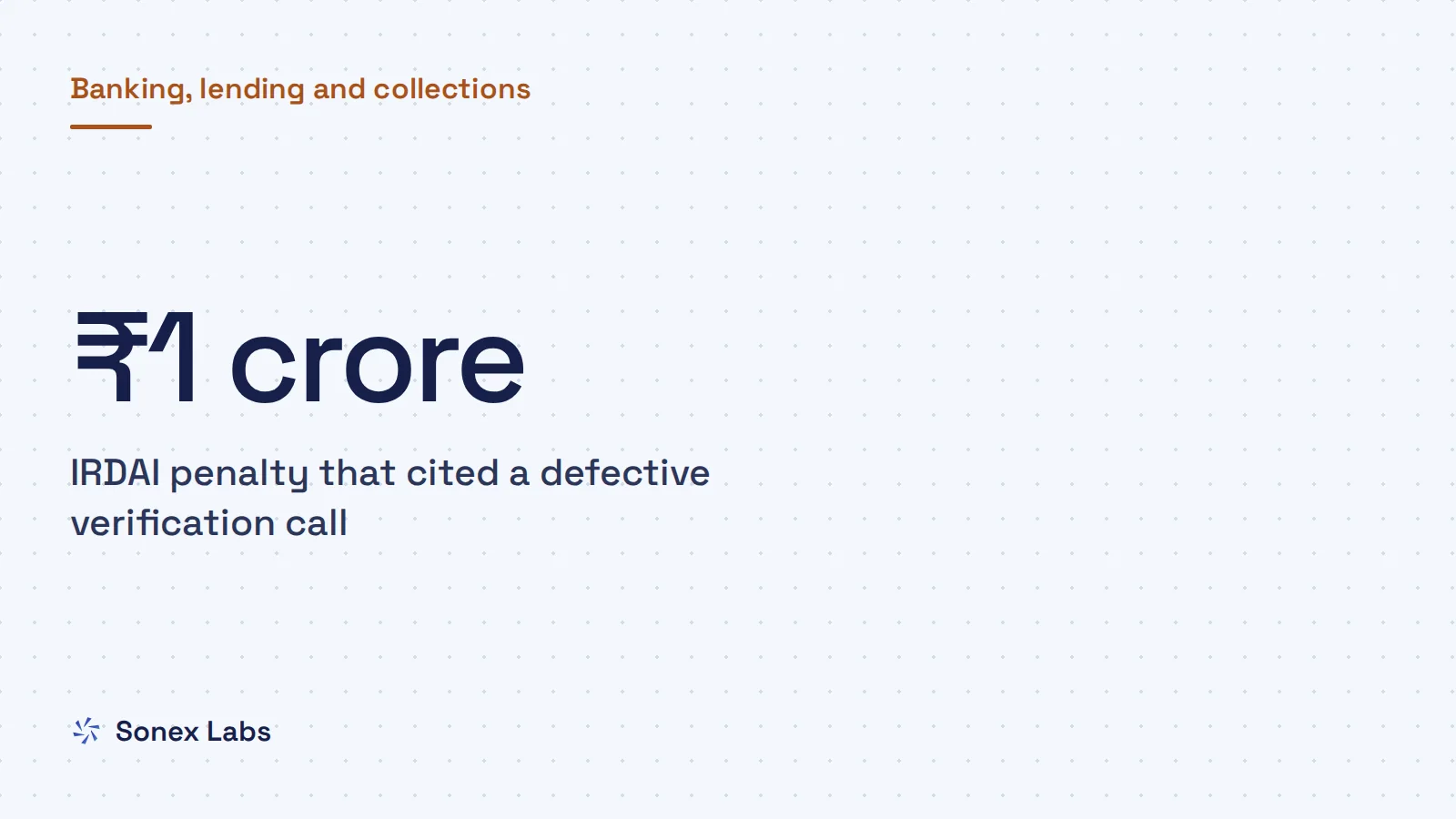
The case concerned a deferred annuity that Canara HSBC Life sold, through its corporate agent Canara Bank, to an 88-year-old customer. The product allowed entry only from age 30 to 80. The premium was ₹2 lakh a year for four years, and the customer's daughter was the annuitant, the person who receives the annuity. IRDAI fined the insurer ₹1 crore under section 102 of the Insurance Act, 1938.
The order (Ref IRDAI/PP&GR/ORD/MISC/118/9/2026) is dated 10 September 2026, and the verification call is a large part of it. The caller said the annuity of ₹50,791 a year "will be given to you" ("aapko diya jayega"), when in fact it would go to the daughter. The insurer explained that "you" was only a way to personalise the call, and IRDAI rejected that explanation (para 5.10).
IRDAI then set out how it sees the call: "A pre-issuance verification call is a critical regulatory safeguard and a formal touchpoint for ensuring informed consent." In setting out the charges, the order also says the customer "was not adequately informed of premium payable and mode of payment" (para 3.2.3). The same paragraph notes an unverified second mobile number on the proposal form.
The call was not the only failure. IRDAI also cited the lack of any suitability or financial assessment and a benefit illustration with no verifiable acknowledgement. The Customer Information Sheet and a copy of the proposal form were not given to the customer, and premium was collected before issue.
According to the insurer's own submissions, after the case spread on social media it refunded the full premium of ₹4,09,000, reversed the commission and introduced "pre-issuance video-based validation calls" (para 4.7). IRDAI went further. Beyond the penalty, the order directs (in its words, "advises") the insurer to do two things relevant here, each within 90 days of the order:
- An audit of all policies sold through Canara Bank to proposers or policyholders above 75 in the three financial years ending 31 March 2026. By our count the report is due about 9 December 2026 (para 6.2.1).
- Stronger oversight of the insurer's corporate agents, with an Action Taken Report (para 6.2.2).
How ombudsmen and the 2011 guidelines judge call records
Judging a sale by its call is not new. Insurance ombudsmen, who hear policyholders' complaints against insurers, decide many mis-selling complaints on the verification call recording, and IRDAI's older guidelines on phone sales set out what that recording should contain.
Ombudsman awards turn on the recording
A clean recording in which the customer confirms the key terms can defeat a complaint. A missing recording, or one with errors, usually ends in a full refund. The Council for Insurance Ombudsmen's published synopses of life insurance awards from late 2015 and early 2016 show both outcomes. They predate the 2024 rules, but they show how ombudsmen weigh the evidence.
In one Ahmedabad award, the customer confirmed on the recorded pre-login verification call the premium, paying term and mode, and that no false benefits were offered, so the complaint failed (AHD-L-001-1516-0541, 24 February 2016). In another, the verification caller used the wrong product name when taking confirmation, and the premium was refunded (AHD-L-001-1516-0540, Ahmedabad, 24 February 2016).
Three other awards turned on missing records. The premium was refunded where the insurer produced no pre-verification call recordings and the policy had no free-look clause (AHD-L-013-1516-0536, Ahmedabad, 23 February 2016). It was refunded where the insurer produced no voice copy of the sales call and no PIVC recording (AHD-L-008-1516-0800, Ahmedabad, 17 March 2016).
In a fifth case the insurer said it made a PIVC but did not produce the record of the full sales process. The ombudsman ordered the policy cancelled and the premium, recorded as ₹21,000, refunded (BHU-L-036-1516-0125, Bhubaneswar, 7 December 2015). The lesson across all five is that the recording is the evidence, so a call that was made but cannot be produced counts for little.
The 2011 distance marketing guidelines
Much of what ombudsmen expect to see is written down in IRDAI's Guidelines on Distance Marketing of Insurance Products, which came into force on 1 October 2011 (IRDA/ADMN/GDL/MISC/059/04/2011, 5 April 2011). They cover every sale or solicitation by phone, SMS, email or any other non-face-to-face mode, by insurers, brokers and corporate agents.
They probably still apply, but this is not confirmed. They are not in the 2024 master circular's repeal list, IRDAI's website still published them when we checked on 24 October 2026, and we found no text that withdraws them. With the PIVC circular gone, they are the most detailed official text on how sales calls should be scripted, recorded and checked. The parts that matter for calls are these:
- Use a standard script for each product, approved by the insurer's compliance officer (para 9.1).
- Give the caller's name and a choice of language, then continue only in the language the client picks (para 9.3(iii)).
- Tell the client the call is recorded and that they can have a voice copy at any time during the policy term or until a claim is settled (para 9.3(iv)).
- Send recordings of calls that lead to a policy to the insurer within 30 days of the sale (para 10(vii)).
- Keep a record of the whole process, from lead to sale, for six months beyond the policy term or until a claim is settled, whichever is later (para 12).
- Listen live to at least 1% of calls and have dedicated staff review the recordings of at least 3% of calls that lead to sales. Each month, make verification calls to at least 3% of distance-mode buyers. Keep life insurance verification call records for at least three years (para 13).
- In a dispute over the policy's wording, the client may give the call records and the key features document primacy over the policy wording (para 15).
What a PIVC should confirm
Put the order, the awards and the regulations together and a clear picture emerges of what the call has to cover. IRDAI has published no mandatory PIVC checklist that we found, so any list is a judgement about what the rules and rulings make important. The table maps each item to the rule or ruling behind it, and says plainly where an item is good practice rather than text.
The closest official model is the 2011 distance marketing guidelines, which ask for a yes or no, or understand or don't understand, answer against each item (para 9.5). That format is worth copying, because a recorded yes to a specific question is far easier to rely on later than a general "okay".
The free-look period and the Customer Information Sheet
Two rules in the 2024 regulations give the PIVC much of its content. The first is the free-look period: 30 days from the date the customer receives the policy document, during which they can return it (regulation 20(1)). It applies to life policies and new individual health policies, except policies with a term of less than a year, and the insurer must tell the customer about it "clearly and explicitly" (regulation 20(2)).
On a free-look request the insurer must refund within 7 days (regulation 20(6)), after the limited deductions that regulation 20(4) allows. Confirming everything on the PIVC does not remove that right. Mentioning the free-look on the call is therefore not a courtesy but one way to show the customer was told.
The second rule is the Customer Information Sheet (CIS), a plain-language summary of the cover, exclusions, free-look and grievance contacts that must come with every policy (regulation 12). The CIS must be available in regional languages if the policyholder asks, and the insurer must get an acknowledgement (master circular, Section 2, Chapter IV, para 17.2).
Language is on request, not automatic
A physical proposal form may be in Hindi or English, with a regional-language version on request (master circular, Section 2, para 11). Where the prospect is not familiar with the form's language and it was explained to them, the form must carry a declaration saying so (para 13.1). The 2011 guidelines add that a phone sale continues only in the language the client picks, so a PIVC in the customer's own language is the consistent choice.
| Confirm | What to ask or say |
|---|---|
| Identity and recordingSource: 2011 distance marketing guidelines para 9.3(iv) (sales by distance mode) | Confirm you are speaking to the proposer. Say the call is recorded. |
| Product name and typeSource: Ombudsman award AHD-L-001-1516-0540: wrong product name on the call led to a refund | Name the exact product, and say it is a life insurance policy. |
| Not a fixed depositSource: Good practice. Mis-selling includes "misrepresenting the facts" (reg. 2(9)(b), 2024 regulations) | Say clearly that the policy is insurance, not a bank deposit or investment scheme. |
| Premium, frequency and paying termSource: Canara HSBC Life order para 3.2.3: customer not adequately informed of premium and mode | Read back the premium, the mode (yearly, monthly) and how many years to pay. |
| Policy term and who gets paidSource: Canara HSBC Life order para 5.10: "will be given to you" was a misrepresentation | State the term and exactly who receives each benefit (proposer, annuitant, nominee). |
| Benefit illustrationSource: Master circular Section 2, Chapter II, para 4; reg. 9 of the 2024 regulations; Canara HSBC Life order para 5.13 | Confirm the customer got and understood the customised benefit illustration, including what is not guaranteed. |
| Death or stopping paymentsSource: Canara HSBC Life order para 5.9 | Explain what happens if the proposer dies or stops paying during the premium term. |
| Free-look periodSource: Reg. 20(1)–(2), 2024 regulations: insurer must inform "clearly and explicitly" | Say the customer can return the policy within 30 days of receiving it. |
| NomineeSource: Master circular Section 2, Chapter III, para 8(ii) | Confirm the nominee's name and relationship. |
| Contact detailsSource: Master circular Section 2, Chapter III, para 12.1(b) | Confirm the mobile number and email belong to the proposer, not the agent. |
| Senior citizens and vulnerable customersSource: Master circular Section 2, Chapter I, para 2: "special attention" to vulnerable groups | Take extra care with age eligibility, affordability and understanding. Offer to bring a family member onto the call. |
| No other promisesSource: Ombudsman award AHD-L-001-1516-0541: this answer on the recording defeated a mis-selling claim | Ask whether anyone promised returns, bonuses or refunds that are not in the policy. |
A sample PIVC script and the decision to issue
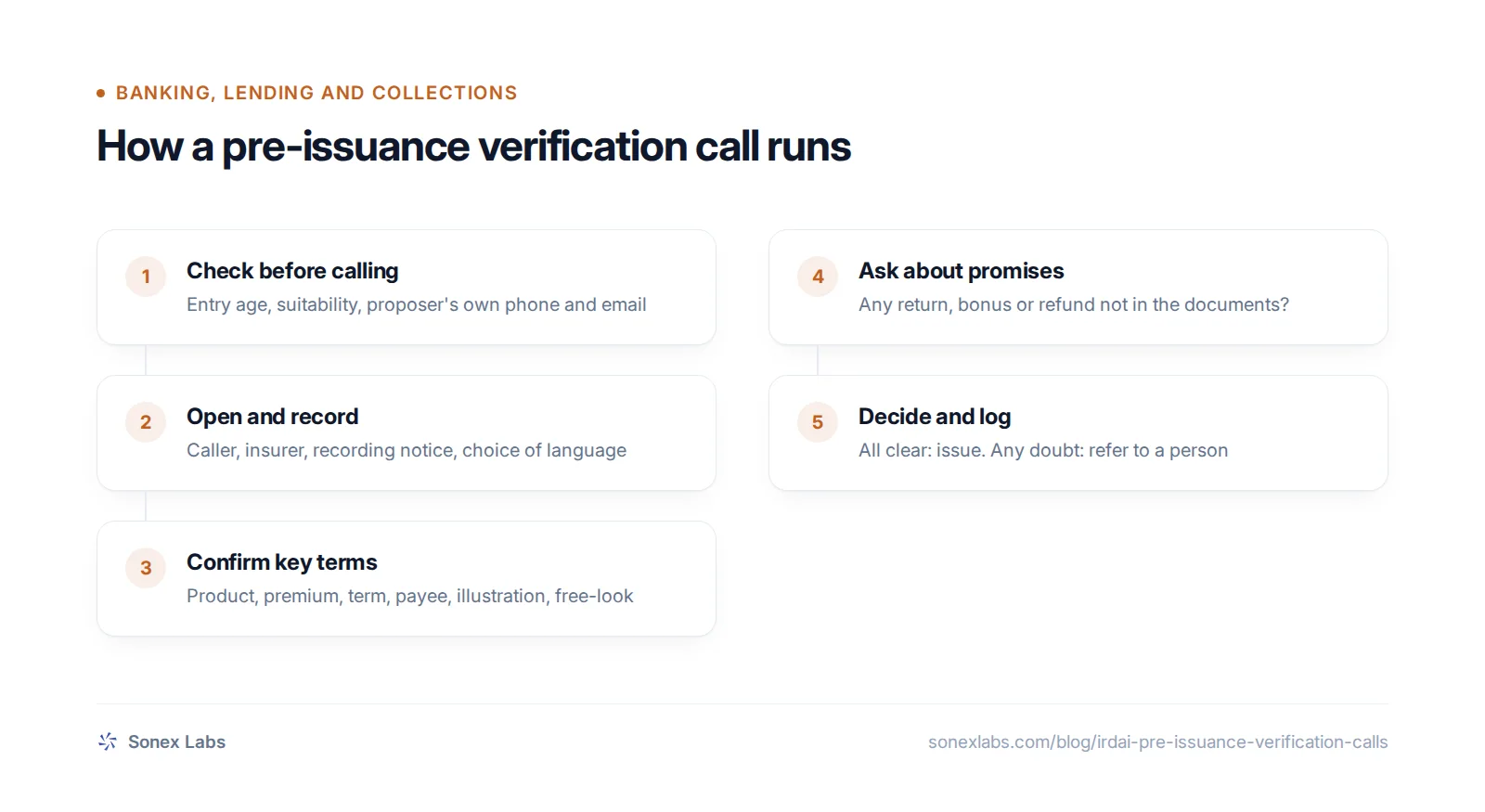
Turning that checklist into words is where most calls go wrong, as the Canara order shows. The outline below is an English sample built from the checklist, not an IRDAI text. It should be adapted to each product and approved by the insurer's compliance officer, as the 2011 guidelines ask. Run it in the customer's chosen language, one question at a time, with a clear yes or no recorded for each.
Because no rule now says which sales need a PIVC, the insurer has to decide, and a written, board-approved policy is the natural place to do it, as the 2020 circular suggested. Covering every savings, annuity and unit-linked sale is a sensible minimum. Keeping a version history of each script lets the insurer show later exactly which words a customer heard.
Before dialling, the same policy should require the checks that were missing in the Canara case. They are the product's entry age, the suitability assessment, and whether the phone number and email belong to the proposer rather than the agent. Customers above 75, or otherwise vulnerable, should be flagged for extra care.
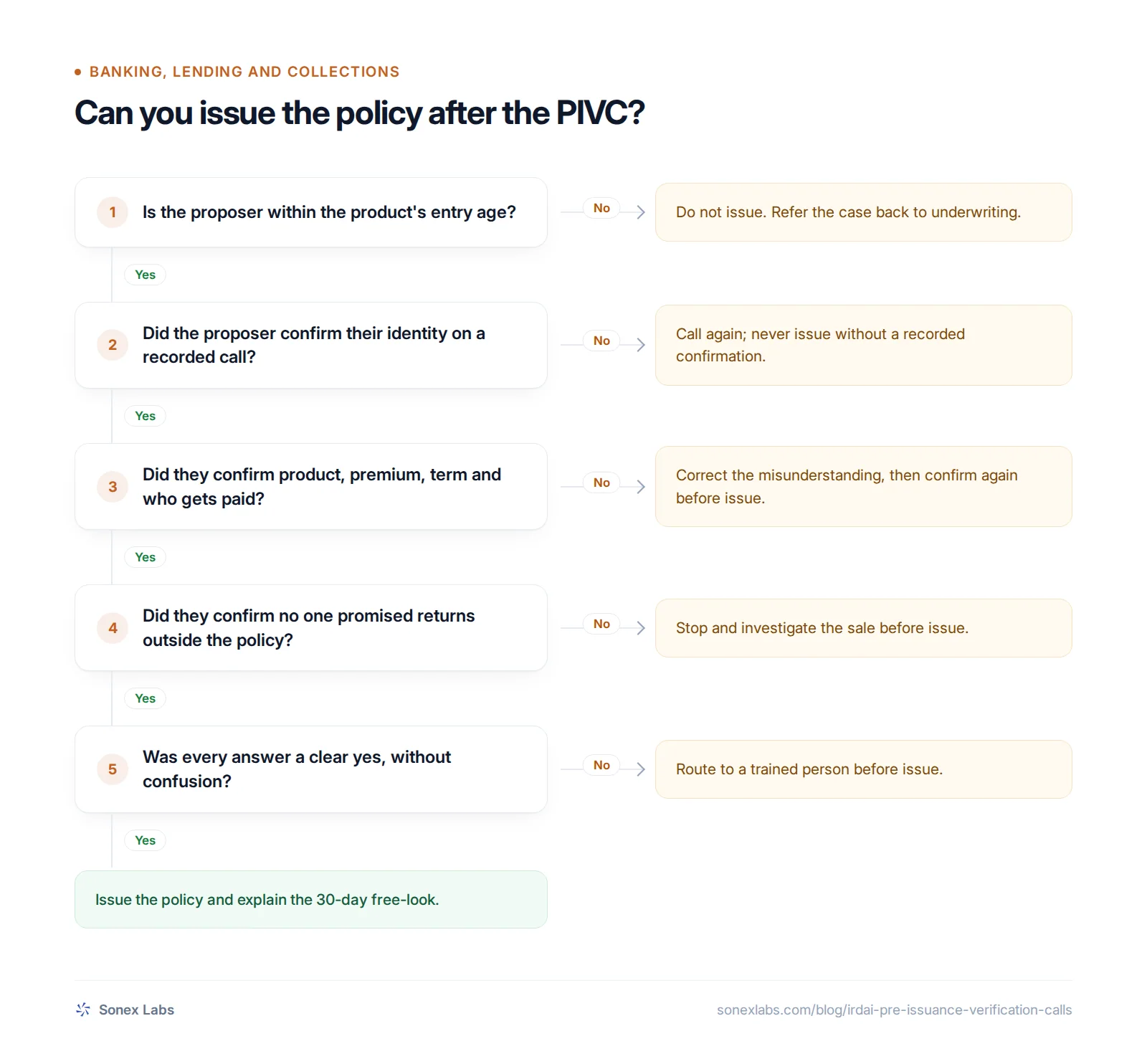
The call should end in a real decision, not a formality. The chart after the script sets out a go or no-go test: any no, hesitation or confusion sends the case back before the policy is issued. For the opening line in other languages, see the recording-notice and AI disclosure scripts; the insurance renewal call script shows the same structure for a later stage of the policy.
- Open: "Hello, this is [name] calling from [insurer] about the life insurance proposal you signed on [date]. This call is recorded. Is this a good time to talk for about five minutes?"
- Identity and language: "Can you please confirm your full name and date of birth? Would you like to continue in English, or in another language?"
- Product: "You have applied for [product name], which is a life insurance policy. It is not a fixed deposit or a bank savings scheme. Is that your understanding?"
- Premium, term and payee: "Your premium is ₹[amount] every [year/month], payable for [n] years. The policy term is [n] years, and [benefit] will be paid to [named person], not to anyone else. Is that what you expected, and can you pay for the full period?"
- Illustration and risks: "Did you receive the benefit illustration? It shows that ₹[x] is guaranteed and ₹[y] depends on investment returns. If you stop paying, or if [proposer] dies before all premiums are paid, [what happens]. Is that clear?"
- Nominee, contact and promises: "Your nominee is [name, relationship]. Is the mobile number [xxxx] your own? Did anyone promise you any return, bonus, loan or refund that is not in these documents?"
- Free-look and close: "After you receive the policy, you have 30 days to read it and return it for a refund if you are not satisfied. Would you like us to go ahead and issue the policy?" If any answer is no or unsure, stop and refer the case back before issue.
Bank-sold policies, AI voice agents and calling numbers
Three practical questions come up once an insurer looks beyond the script. They are how the call fits with a partner bank's own checks, whether software can make it, and which number it should come from.
The bank's 30-day feedback check from 2027
Policies sold through banks, known as bancassurance, will soon face a second check. The RBI (Commercial Banks – Responsible Business Conduct) Second Amendment Directions, 2026 (RBI/2026-27/115, 15 June 2026) take effect on 1 January 2027. They cover third-party products such as insurance, at commercial banks other than small finance, payments, regional rural and local area banks.
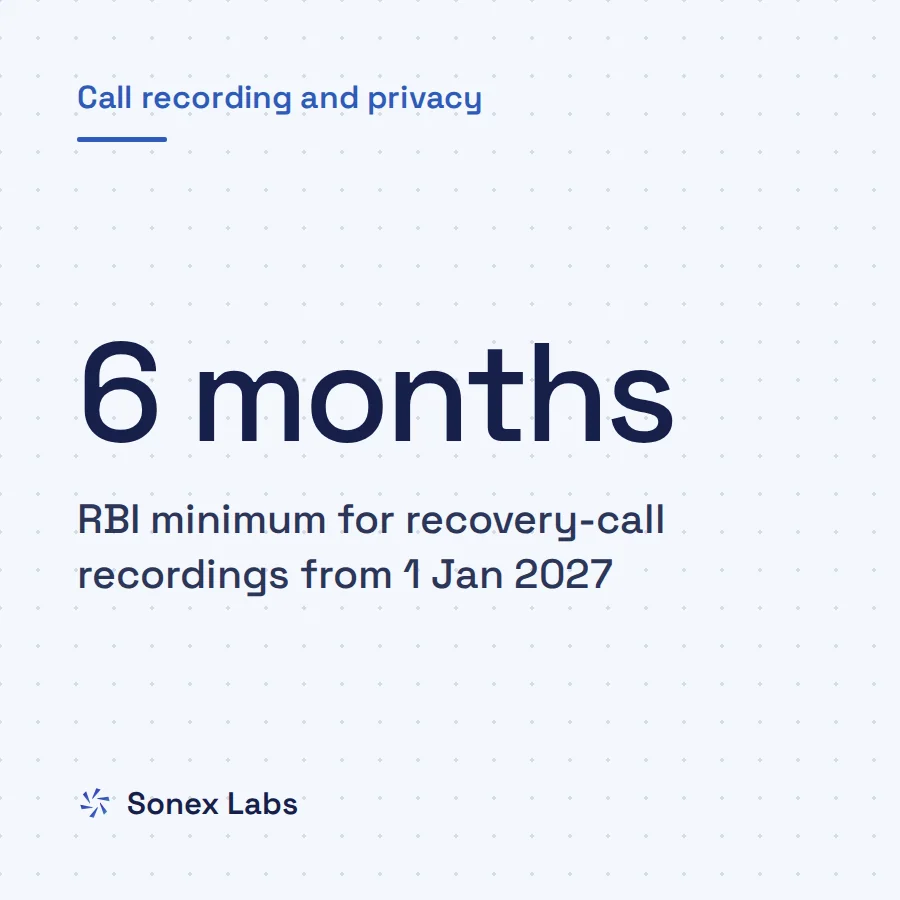
The bank must set up a way to seek customer feedback within 30 days of selling any financial product. The directions say this may include call-backs or surveys of customers picked at random, run by a unit not involved in the sale (para 85Y). Where mis-selling is established, the bank must refund the full amount and compensate the customer under its approved policy (para 85Z). It must keep consent records until one year after the contract ends, and may take consent as a "digitally recorded confirmation" (para 85G).
So a bank-sold policy may face two checks: the insurer's call before issue and, if the customer is picked, the bank's feedback check within 30 days of the sale. IRDAI's corporate agent rules do not, as far as we found, require the bank itself to make a PIVC. The PIVC remains the insurer's control, and insurers and partner banks gain from agreeing how the two checks share results, so that either side can act when mis-selling is found. The bank-side sales rules are explained further in the guide to dark patterns on sales calls.
Can an AI voice agent make the PIVC?
No IRDAI text we found addresses automated or AI verification calls, for or against. In the Canara case IRDAI held the insurer liable for what was said, even though its corporate agent made the sale. We see no reason the answer would change for a call made by software on the insurer's behalf, though that is our reading rather than IRDAI's.
Automation suits the structured part of the call: a fixed script, one question at a time and every answer recorded. What it must not do is decide a doubtful case. An automated PIVC should route any "no", hesitation or sign of confusion to a trained person before the policy is issued. Senior and vulnerable customers are a reason to hand over early, since the master circular asks for "special attention" to them. That is the design behind AI voice agents for insurers, which can transfer a live call to a human agent.
Which number series a PIVC should use
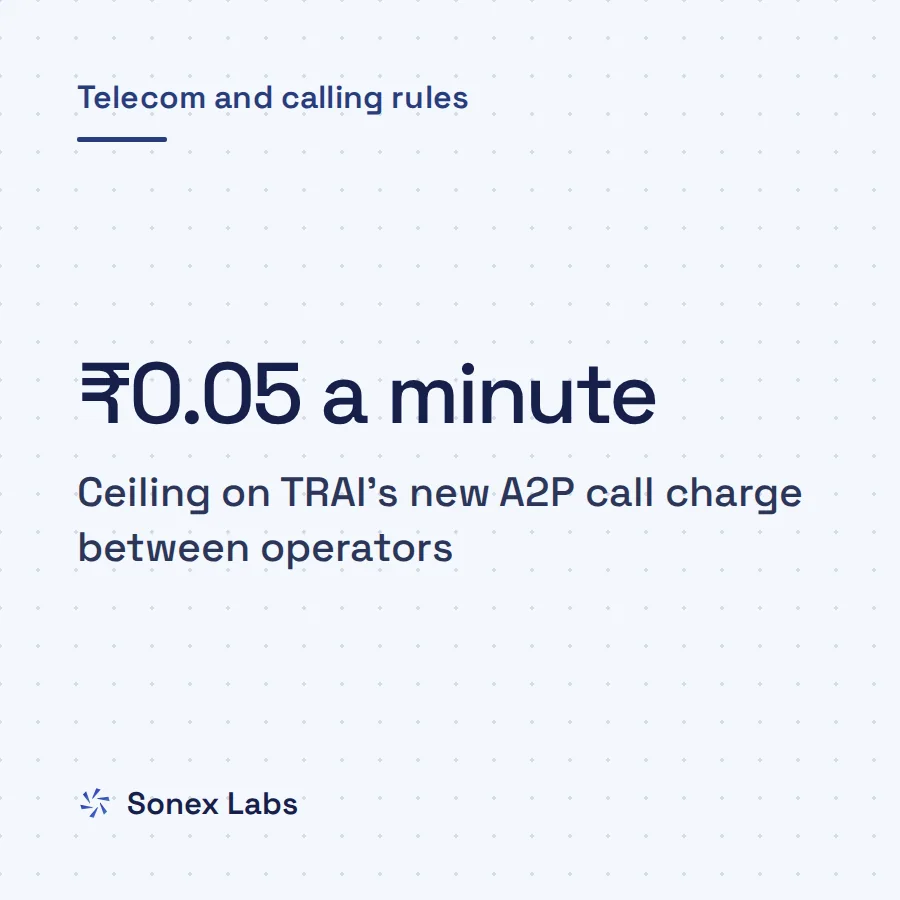
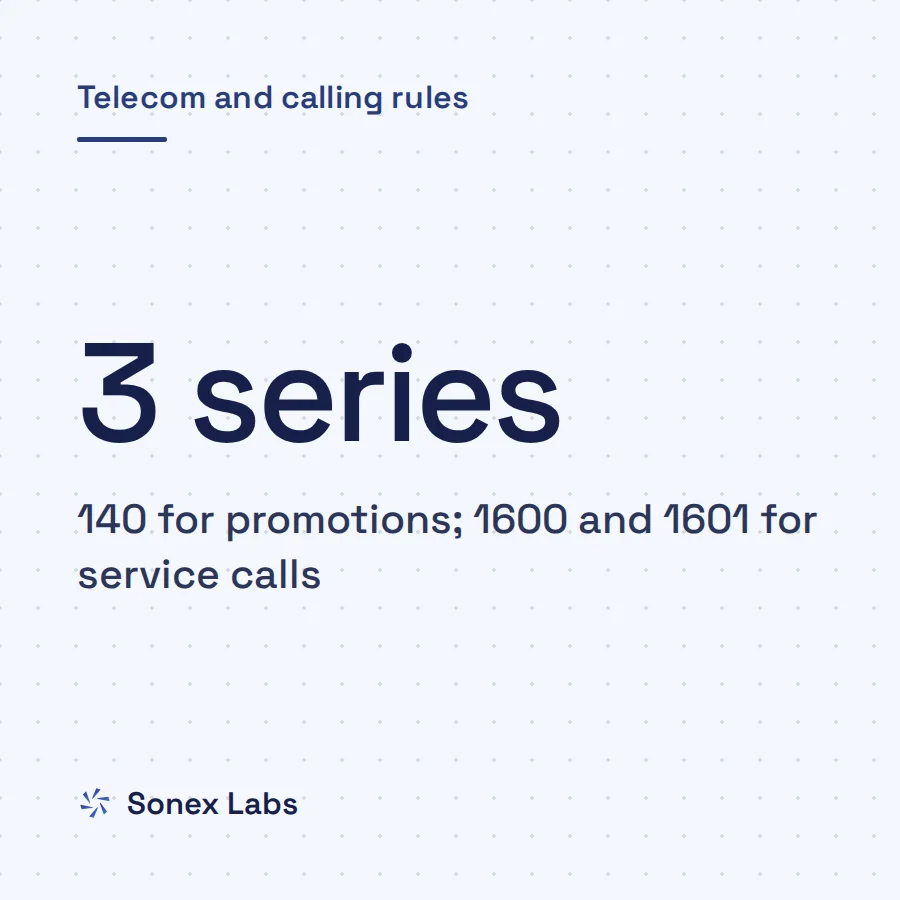
It is unclear which number a PIVC should come from. Insurers had to move service and transaction calls to the 1600 series by 15 February 2026 (TRAI press release 151/2025). TRAI's July 2026 clarification describes 1600 as for calls "to their existing customers" (press release 91/2026). A proposer is not yet a policyholder, so insurers should ask their operator. The guide to the 140, 1600 and 1601 number series explains the split, and TRAI's rules for automated calls cover the rest.
Key dates
Sources
- IRDAI: Circular on Pre-Issuance Verification Call (PIVC), IRDAI/Life/Misc/CIR/116/05/2020, 12 May 2020Official
- IRDAI: Master Circular on Protection of Policyholders' Interests, 2024 (IRDAI/PP&GR/CIR/MISC/117/9/2024)Official
- IRDAI (Protection of Policyholders' Interests, Operations and Allied Matters of Insurers) Regulations, 2024Official
- IRDAI: Order in the matter of Canara HSBC Life Insurance (IRDAI/PP&GR/ORD/MISC/118/9/2026), 10 Sep 2026Official
- IRDAI press release on the Canara HSBC Life order, 10 Sep 2026Official
- IRDA: Guidelines on Distance Marketing of Insurance Products, 5 Apr 2011Official
- Council for Insurance Ombudsmen: synopses of life insurance awards (miscellaneous), 2015-16Official
- RBI: Commercial Banks – Responsible Business Conduct Second Amendment Directions, 2026 (RBI/2026-27/115)Official
- RBI press release on the sales and marketing directions, 15 Jun 2026Official
- TRAI press release 151/2025: 1600 series for IRDAI-regulated entities, 17 Dec 2025Official
- TRAI press release 91/2026: clarification on the 1600 and 140 series, 10 Jul 2026Official
- Moneylife: IRDAI penalises Canara HSBC Life, orders audit of policies sold to over-75sSecondary
Change log: 24 Oct 2026, Rewritten as one continuous guide: the PIVC policy, pre-call checks and script versioning moved into the script section; the bank, AI and number-series questions given their own subsections; takeaways, steps, checklist and FAQs (full form, cancelling after a PIVC, phone mis-selling rules) folded into the body. Earlier the same day: corrected an ombudsman refund amount, the bank feedback rule and the distance marketing audit rates; hedged the no-rule finding · 23 Oct 2026, First published